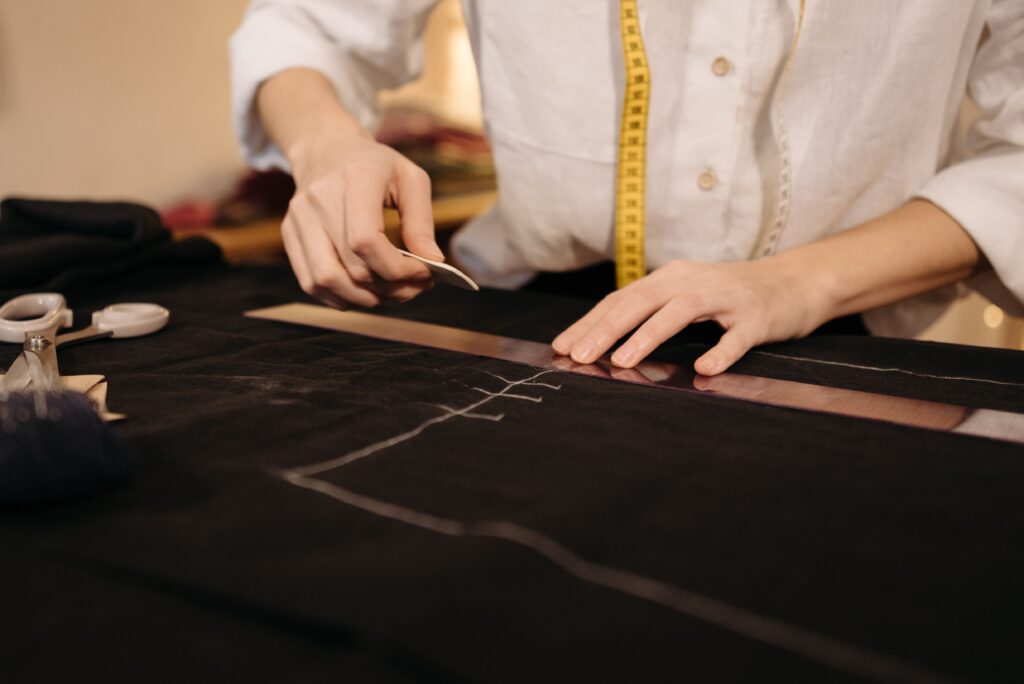
Work pants get fitted around hardware. A belt, a set of boots, and whatever you hang off your waist all change the numbers, and none of that is accounted for by the size printed on the pair you bought five years ago.
Measuring is quicker than guessing, and it takes a tape and about four minutes.
Measure Over What You Actually Wear
Put on the belt and the base layer you normally work in, then measure your waist where the pants will actually sit, which for most work cuts is at or just below the navel rather than at the narrowest point. Keep the tape level and do not pull it tight.
If you carry tools on the waist, add the width of the belt system to your reading. A pair that fits perfectly bare will bind the moment a loaded belt goes over it.
Rise Decides Whether You Can Sit Down
Rise is the distance from the crotch seam to the top of the waistband. A short rise looks fine standing and pulls hard the moment you crouch, which is the single most common reason a pair of pants gets abandoned after two weeks.
Measure the rise on a pair that already works for you, front and back separately, and compare it to the listing. A difference of half an inch is nothing. An inch and a half changes the whole garment.
Inseam Is a Boot Decision
The right inseam depends on the height of the boot the pants will sit over. On a low work shoe you want the hem to break lightly on the laces with no fabric pooling. On a taller boot the hem needs an extra half inch or so to stay put when you bend the knee, otherwise the leg rides up and leaves a gap at the ankle every time you kneel.
Measure the inseam on a pair you like, flat, from the crotch seam to the hem. If you are between lengths, take the longer one. Hem allowance can come out; it cannot go in.
Thigh and Seat Room for Squatting
Lay a pair you already own flat, smooth out the wrinkles, and measure across the thigh about two inches below the crotch seam, then across the seat at the widest point. Those two numbers tell you more about how a pair will feel in a squat than the waist size does.
A useful check on a new pair: squat all the way down at home, with the tags still attached. If the seat pulls or the knees feel tight before you are fully down, the cut is too lean for the work. Trying things on indoors is exactly what our Return & Refund Policy expects, so nothing is lost by testing it properly.
Shirt Length and the Bend Test
Shirts have their own version of this. Raise both arms straight overhead and see whether the hem lifts clear of the waistband. If it does, the shirt is short for the way you work, and it will spend the day untucking itself.
Sleeve length is checked with the arm bent rather than straight, since that is the position it spends the day in. A cuff that sits at the wrist bone with the arm bent is right.
Between Two Sizes
For pants, size to the seat and thigh and let the waist be adjusted by the belt, because a waistband can be cinched and a seat cannot be let out. For shirts, size to the shoulder seam, which should land at the edge of your shoulder rather than partway down the arm. Everything else on a shirt is adjustable and the shoulder is not.
Flat measurements for every item are published on the listing, and further sizing questions are answered on our FAQs page.
Thank you for shopping with us, and for the kind of workday these clothes are meant to keep up with.